
How to Test Different Backend States Without a Backend Change in 2026
Testing edge cases, error states, and complex data scenarios shouldn't require a backend deployment. In 2026, the fastest QA and product teams intercept and transform API responses at the network layer - reproducing any backend state in seconds, without touching the server.
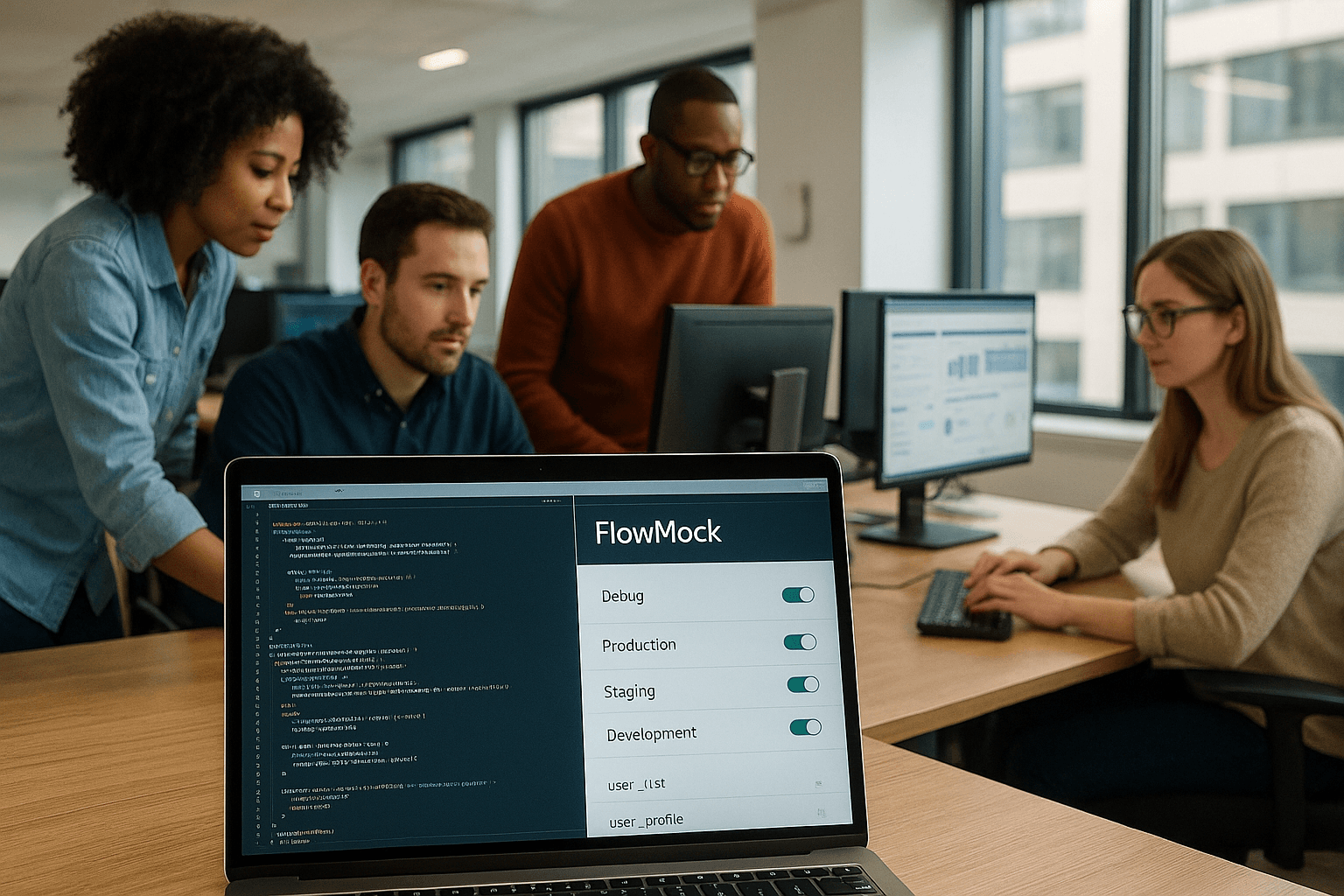
Every QA engineer has been there: you need to test what happens when a user's subscription expires, but resetting the database takes 45 minutes and breaks three other testers' sessions. Testing different backend states without a backend change is the single biggest unlock for high-velocity product teams in 2026. Instead of waiting for environment provisioning - which consumes up to 30% of QA cycles - teams can intercept HTTP traffic, transform responses on the fly, and share reproducible scenarios across the entire team. This guide covers exactly how to do it, from network interception fundamentals to session isolation and compliance-safe data simulation [8][2].
Why Backend State Testing Bottlenecks Cost Teams Real Time
QA teams in 2026 spend up to 30% of their testing cycles waiting for environments to be provisioned or data to be seeded into the correct state - time that produces zero shipped features [2]. Shared staging environments compound the problem: when Tester A seeds a "subscription expired" record, it overwrites the "new user" state Tester B was relying on, causing cascading test failures.
Traditional workarounds - local database seeding scripts, hardcoded frontend mocks, or asking a backend engineer to temporarily break an endpoint - each introduce their own failure modes [3][4]. Hardcoded mocks skip the actual network request layer entirely, meaning real latency, headers, and serialization bugs go undetected until production.
The root cause is a coupling problem: frontend and QA workflows are blocked by backend availability. Decoupling them at the network layer is the architectural shift that eliminates the bottleneck - and the next section explains the mechanism.
Network Interception: The Core Mechanism for State Simulation
Network interception means placing a proxy or service worker between the frontend and the backend so that every outgoing HTTP/HTTPS request passes through a controllable layer. This single architectural decision lets teams simulate any backend state - 200 OK, 429 rate-limited, 503 unavailable - without touching the server once.
The interception layer reads the request, checks whether an active mock rule matches the endpoint and session, and either returns a synthetic response or forwards the request and transforms the real response before it reaches the client. Teams using this approach catch frontend error-handling bugs that the happy path never surfaces [2].
A practical example: intercept GET /api/user/profile, let the real backend respond, then modify the subscription_status field from active to expired in transit. The frontend receives a realistic payload - correct headers, realistic latency - but with the exact state needed for the test. Response transformation is the subject of the next section.
Response Transformation: Modify Real Payloads Without Rewriting the Backend
Response transformation goes one step further than pure mocking: instead of replacing the entire response with a static fixture, you let the backend return its real payload and surgically alter only the fields that define the state you need to test. This approach keeps 95% of the response realistic while injecting the 1 edge-case field that triggers the UI branch you care about.
Common transformation patterns teams apply in 2026 include:
- Changing
subscription_statustoexpiredto test paywall enforcement logic. - Setting
cart_itemsto an empty array to validate empty-state UI rendering. - Injecting a
retry_afterheader to simulate a 429 rate-limit response. - Replacing a
200status code with500to test global error boundary components. - Truncating a paginated list to 0 items to verify infinite-scroll edge cases.
- Adding a malformed JSON field to confirm the frontend's parse-error handling.
Because the transformation runs at the network layer, the frontend's actual fetch logic executes - no test doubles, no bypassed middleware. This is why E2E testing increasingly relies on hybrid models that combine live pre-production backends with injected network mocks [5].
Isolated Sessions Eliminate the Shared-Environment Collision Problem
The most common objection to team-wide API mocking is interference: if Tester A mocks a 500 error on /api/orders, does Tester B also see the 500? Session-based mock routing solves this entirely - each user's browser session carries a unique identifier that the interception layer uses to apply only that session's rules.
In practice, Tester A opens a session tagged session-error-flow and activates a 500 mock. Tester B's session, tagged session-happy-path, routes through to the real backend untouched. Both testers hit the same staging URL simultaneously with zero interference - a capability that shared database seeding can never replicate [4].
Product managers benefit equally: a PM can activate a "Premium Feature Preview" scenario in their own isolated session to validate copy and UI without provisioning a separate environment. This collapses the feedback loop from days to minutes. Scenario management - grouping these session rules into reusable packages - is the logical next step.
Scenario Libraries: Build Once, Reproduce Any State in One Click
A scenario is a named, versioned collection of mock rules and response transformations that together reproduce a complete app state. Teams that maintain a shared scenario library reduce state-reproduction time from hours to under 60 seconds, because no one re-invents the database seed script for "Expired Trial User" on every sprint.
High-value scenarios to build first include:
- New User Onboarding Failure - empty profile, missing payment method, 0 completed steps.
- Subscription Expiry Gate - expired status, locked feature flags, renewal CTA visible.
- API Timeout Cascade - primary endpoint returns 504, fallback endpoint returns stale data.
- Rate Limit Enforcement - 429 on write endpoints, retry-after header set to 30 seconds.
- Empty State Across All Lists - zero items in cart, inbox, and activity feed simultaneously.
- Malformed Data Resilience - null fields, unexpected types, truncated strings in critical UI components.
Storing scenarios in a shared team library means QA, developers, and product managers all activate the same reproducible state - eliminating the "works on my machine" problem that plagues environment-dependent testing [3]. Compliance requirements add another compelling reason to adopt this approach.
Compliance and Security: Why Mocking Is the Regulation-Safe Testing Strategy
Copying production data into staging environments to reproduce backend states is not just operationally risky - it is a regulatory liability. The California Privacy Rights Act (CPRA) and UK/EU GDPR both mandate data minimization, explicitly restricting the use of real consumer data in non-production environments [6][7].
The UK Information Commissioner's Office (ICO) publishes direct guidance warning organizations against using real backend production data for software testing [7]. NIST Special Publication 800-218 (the Secure Software Development Framework) reinforces this by recommending that teams isolate test environments and use simulated data - mocks and stubs - to prevent sensitive data exposure during QA [8].
CISA's Secure by Design guidelines further advise against testing experimental frontend features against live backend databases, citing risks of accidental data corruption and unauthorized exposure [9]. API mocking and response transformation satisfy all three regulatory frameworks simultaneously: no real user data enters the test loop, no production database is touched, and every state is reproducible from synthetic inputs. The DevOps angle on backend state testing carries its own distinct set of considerations.
DevOps Context: Testing Infrastructure State Without Altering Remote Backends
For DevOps and platform engineers, "backend state" carries a second meaning: the Terraform or OpenTofu state file that tracks deployed infrastructure. Testing local infrastructure changes without corrupting the shared remote state backend is a parallel challenge [1].
The standard approach uses terraform plan with a local backend override, or workspace isolation, to validate changes against a read-only copy of the state. This mirrors the application-layer principle exactly: isolate the test context so that experimental changes never propagate to the shared environment.
Both domains - application state and infrastructure state - converge on the same architectural principle: isolation at the boundary. Whether the boundary is an HTTP response or a Terraform state file, the pattern is intercept, transform, and scope to a session or workspace. Teams that internalize this principle ship faster and break production less often [1][8]. The practical workflow for implementing all of this is straightforward.
Practical Implementation Workflow: From Zero to Reproducible States in a Day
Implementing backend-state testing without backend changes follows a repeatable 4-step workflow that most teams complete in under 1 business day:
- Instrument the network layer. Install a browser extension, configure a proxy, or register a service worker that routes all API traffic through the interception layer. Zero backend changes required.
- Define your first transformation rule. Target a specific endpoint and field. Start with a high-value edge case - a 500 error on your primary data endpoint - and verify the frontend handles it gracefully.
- Wrap rules into a named scenario. Group the transformation with any related mock rules, name it descriptively (e.g., "Checkout - Payment Declined"), and save it to the shared team library.
- Assign session identifiers. Each tester activates scenarios within their own session. Confirm that a second browser session on the same staging URL receives the unmodified backend response.
Teams using FlowMock complete this workflow against their existing staging environment - no new infrastructure, no backend PRs, no database migrations [2][5]. The final section addresses the most common implementation questions.
Choosing the Right Tool: What to Look for in a Backend-State Simulation Platform
Not all API mocking tools support the full workflow described above. When evaluating a platform for testing different backend states without backend changes, prioritize these 5 capabilities:
- Session isolation: Mock rules must be scoped per user session, not globally applied to the staging environment.
- Response transformation (not just replacement): The tool must modify real backend responses in transit, not only serve static fixtures.
- Shared scenario library: Scenarios must be saveable, versionable, and activatable by non-engineers - product managers and QA leads included.
- Zero backend dependency: Setup must require no backend code changes, no new API endpoints, and no server restarts.
- Compliance-safe data handling: The platform must operate on synthetic or transformed data, never storing or transmitting real production payloads [6][7][8].
FlowMock is purpose-built for exactly this workflow - isolated sessions, on-the-fly response transformation, and a shared team scenario library that any QA engineer, developer, or product manager can use against an existing staging environment. Teams that adopt this approach stop waiting on backend availability and start shipping resilient frontends faster [9].
FAQ
What does 'testing backend states without a backend change' actually mean?
It means simulating specific conditions - like a 500 server error, an empty database result, or an expired user account - at the network layer rather than by modifying the actual backend code or database. The backend continues running normally; a proxy or service worker intercepts and transforms the responses the frontend receives, making it appear as though the backend is in a different state.
What is response transformation and how is it different from API mocking?
Traditional API mocking replaces an entire API response with a static fixture file. Response transformation is more surgical: it lets the real backend respond normally, then modifies only specific fields or headers in transit. For example, you might let the backend return a full user object but change one field to simulate an edge case. This produces more realistic tests because the rest of the payload - headers, latency, structure - remains authentic.
How does FlowMock help teams test different backend states?
FlowMock provides isolated sessions, response transformation, and a shared scenario library that works against any existing staging environment. QA engineers, developers, and product managers can activate named scenarios - like 'Subscription Expired' or 'API Timeout Cascade' - in their own browser session without affecting other team members. No backend code changes, no database migrations, and no new infrastructure are required.
What are 'scenarios' in the context of backend state testing?
A scenario is a named, versioned collection of mock rules and response transformations that together reproduce a complete, specific app state. For example, a 'New User Onboarding Failure' scenario might include an empty profile response, a missing payment method, and a 0-step progress indicator - all activated simultaneously with one click. Storing scenarios in a shared library means any team member can reproduce the exact same state without manual setup.
Does testing backend states with API mocking satisfy GDPR and CPRA compliance requirements?
Yes. Both GDPR and the California Privacy Rights Act (CPRA) require data minimization and restrict the use of real consumer data in non-production environments. API mocking and response transformation use synthetic or transformed data, meaning no real user records enter the test loop. NIST's SSDF and CISA's Secure by Design guidelines also recommend this approach as a security best practice.
How long does it take to set up backend-state testing without backend changes?
Most teams complete the initial setup in under one business day. The workflow involves four steps: instrumenting the network layer (browser extension or proxy), defining the first transformation rule, wrapping rules into a named scenario, and assigning session identifiers to testers. Because no backend changes are required, there are no PRs to review, no deployments to wait for, and no database migrations to run.
Sources
Related articles
How to Simulate API States QA Can't Reproduce on Staging (2026 Guide)
QA teams in 2026 still lose 30-40% of their sprint time fighting staging environments that can't produce the exact API states needed to validate error handling, rate limits, or third-party failures. This guide shows you exactly how to break that cycle.

How to Reproduce a Bug That Only Happens Sometimes (2026 Guide)
Sporadic bugs cost U.S. teams tens of billions of dollars annually-yet most debugging workflows still rely on luck. This guide gives QA, dev, and product teams a repeatable, tool-backed system to capture and reproduce any intermittent bug, every time.

How to Test on Shared Staging Without Affecting Teammates in 2026
Shared staging environments are slowing your team down. Here's how to test in parallel without breaking anyone else's work - and why isolated sessions change everything.